
Excavation Reinstatement in Kings Hill
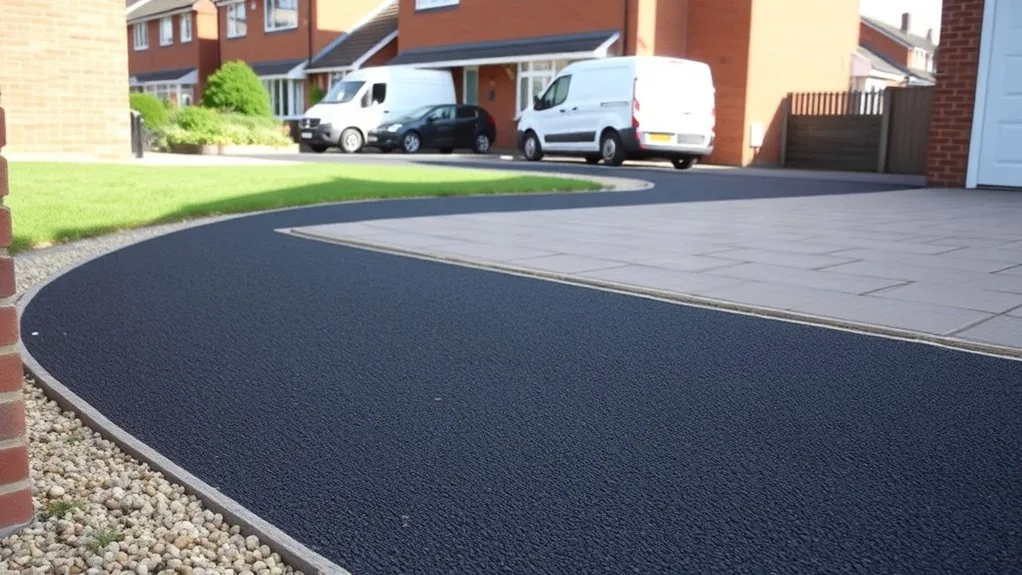
When you need excavation reinstatement in Kings Hill that fully complies with SROH, HAUC and local authority standards, it’s important to restore every layer accurately from formation to surface.
Proper backfilling, material selection and compaction ensure minimal settlement and protect buried services while maintaining drainage.
Call us for a fast quote or emergency callout across Kings Hill.
When you’re dealing with underground works in Kings Hill, excavation reinstatement is the regulated process of restoring any opened ground—carriageways, footways, verges, or private land—to a condition that meets prescribed technical and safety standards after utility, drainage, or infrastructure works. You’re required to reconstruct the excavation in strict layers, using specified materials, compaction levels, and surface finishes so soil stability, load-bearing capacity, and drainage performance match or exceed the original.
In practice, you’re applying the Specification for the Reinstatement of Openings in Highways (SROH) and any local authority requirements. That means verifying sub-base depth, asphalt grades, jointing methods, and tolerances, while actively controlling environmental impact through correct waste segregation, material reuse where permitted, and minimisation of dust, noise, and contamination pathways.
Not every excavation in Kings Hill triggers a full reinstatement duty, but the moment you mechanically break, cut, core, or otherwise disturb the structure of a highway, footway, verge, or shared surface, you’re into regulated reinstatement territory under the SROH and local authority permit conditions. You’ll typically need excavation reinstatement when your works affect:
When you commission excavation reinstatement in Kings Hill, you’ll follow a tightly controlled sequence that starts with an initial site assessment to verify utilities, ground conditions, and statutory compliance. From there, the process moves through regulated excavation and support, then layered backfilling methods that meet specification for compaction, material type, and thickness. Finally, you’ll see a surface restoration finish that’s matched to highway or site standards so the reinstated area complies with local authority and national codes.
Before any reinstatement work proceeds in Kings Hill, a structured initial site assessment verifies that the excavation, surrounding assets, and ground conditions meet technical, safety, and regulatory requirements. You’ll have your site benchmarked against statutory guidance, local authority specifications, and utility-owner standards.
Inspectors analyse soil stability, groundwater presence, load paths, and existing surface construction so reinstatement layers can be designed correctly. They also document environmental impact, including runoff risk, waste classification, and potential contamination.
| Assessment Focus | What You Can Expect |
|---|---|
| Records & Permits | Checks against utility plans, permits, section 50/WA notices |
| Existing Surfaces | Precise logging of asphalt, concrete, or modular finishes |
| Underground Services | Survey of depth, location, and protection requirements |
| Access & Safety Zones | Defined exclusion zones and public interface controls |
All findings inform a compliant, auditable reinstatement plan.
Once the site assessment’s complete, excavation and temporary support in Kings Hill move forward under tightly controlled, specification-led procedures that protect buried assets, workers, and the public. You’ll see excavation limits, depths, and profiles set out in accordance with local authority specifications, utility owner requirements, and CDM regulations.
You must maintain soil stability through calibrated benching, battering, or engineered shoring systems, chosen using ground investigation data and groundwater conditions. Trench boxes, hydraulic frames, or sheet piles are installed to manufacturer load tables and inspected at defined intervals.
Spoil is segregated and stockpiled to minimise surcharge on trench edges and reduce environmental impact, including silt run-off and dust. Access/egress, exclusion zones, and plant movements are tightly controlled to prevent collapse and service strikes.
Although excavation support systems remain in place until it’s safe to remove them, the reinstatement in Kings Hill really starts with controlled, layered backfilling that rebuilds the trench from formation level up. You’ll place selected fill in compacted lifts, typically 150–300 mm thick, achieving specified compaction percentages verified by in‑situ testing. This staged approach restores soil stability around services and prevents post‑works settlement.
You must segregate materials, keeping unsuitable spoil out of structural layers to comply with specification clauses and to minimise environmental impact from future failures or re‑excavation. Compaction plant selection, moisture conditioning, and lift thickness are all governed by highway and utility reinstatement standards. By following these, you guarantee uniform bearing capacity, protect adjacent structures, and maintain long‑term geotechnical performance.
Only when the engineered backfill meets density and level tolerances can you progress to the surface restoration finish, where compliance with Kings Hill County Council, HAUC, and Specification for the Reinstatement of Openings in Highways (SROH) standards is critical. You’ll verify formation levels, crossfall, and tie-ins to existing surfacing before any surface preparation begins.
You must align material selection with the existing construction: flexible, rigid, or composite. That means matching thickness, PSV, SRV, texture depth, and joint layout so the reinstatement’s technically indistinguishable from the surrounding pavement.
| Stage | Key Requirement | Standard / Control |
|---|---|---|
| Surface preparation | Saw-cut, clean, dry, stable edges | SROH, HAUC |
| Binder/base course | Compaction, bond coat, level tolerances | SROH, DMRB (where cited) |
| Surface course placement | Aggregate grading, PSV, texture compliance | Kings Hill CC, SROH |
| Final inspection & record | Joint sealing, markings, documentation | NRSWA, Kings Hill CC permits |
When you compare excavation reinstatement with traditional excavation, the key differences centre on compliance obligations, lifecycle management of the works, and the standard of permanent restoration rather than just soil removal and backfilling. You’re not simply digging and refilling; you’re working to prescribed specifications for compaction, soil stabilization, layer thicknesses, and surface tolerances set out in local authority and highways guidance.
Traditional excavation often treats backfill as a secondary task, whereas reinstatement treats it as a regulated engineering operation. You must document material types, compaction methods, and sequence to control settlement and environmental impact, including runoff and waste handling. Inspection, testing, and sign‑off procedures are also more stringent, ensuring the reinstated trench performs as an integral part of the existing asset.
By treating backfilling and surface restoration as a controlled engineering process rather than a tidy‑up exercise, excavation reinstatement delivers measurable benefits in safety, compliance, and whole‑life asset performance. You’re not just closing a dig; you’re rebuilding the ground and surface to defined technical and regulatory standards, with full traceability.
Whether you’re dealing with a single driveway trench or a multi‑utility street opening, excavation reinstatement in Kings Hill applies the same engineered principles across both domestic and commercial settings. You’re governed by BS 7533, HAUC (UK) specifications and local authority permit conditions, so compaction, layer thickness and surface tolerances must be tightly controlled to protect soil stability, drainage paths and buried assets.
| Application Type | Key Technical Focus | Compliance Considerations |
|---|---|---|
| Domestic | Driveways, paths, service laterals | Match finishes, prevent settlement and ponding |
| Commercial | Car parks, service yards, loading | High load capacity, joint performance |
| Highway Frontage | Footways, crossovers, verges | Chapter 8, SRoH, utility coordination |
Across all uses, you’ll require documented materials, compaction records and measures that minimise Environmental impact.
From single‑property connections to multi‑utility street works, our excavation reinstatement service across Kings Hill is structured to meet the same standards you’re governed by: BS 7533, the Specification for the Reinstatement of Openings in Highways (SRoH), HAUC (UK) guidance and local permit conditions. You get reinstatements sequenced to match your works programme, with layers built to the specified thicknesses, compaction levels and material classes.
We coordinate with highway authorities, utility asset owners and conservation officers to guarantee compliance where carriageways, footways, verges and specialist paved areas are affected. On sensitive streets, Historical preservation and streetscape continuity are factored into material selection and laying patterns. You also benefit from controlled waste handling, segregation and backfill design that actively reduces Environmental impact while meeting performance criteria.
When you appoint us for excavation reinstatement in Kings Hill, you’re engaging a contractor that works to the same statutory and technical controls you do, not a looser “best‑efforts” standard. We align our methods with NRSWA, HAUC, and local authority specifications, documenting compliance at every stage so you can evidence due diligence.
You’ll benefit from rigorously audited safety protocols, structured task‑specific RAMS, and competency‑verified operatives, reducing incident risk and unplanned downtime. Our material selection, compaction regimes, and testing processes are calibrated to minimise settlement, prevent utility conflict, and protect adjoining assets.
We also quantify and mitigate environmental impact, optimising waste segregation, recovery, and transport routes to reduce your project’s carbon footprint while keeping you aligned with ESG and planning obligations.
You’ll likely want clear, specific answers on programme duration, comparative cost against traditional open-cut excavation, and geographic coverage across Kings Hill before commissioning any works. In this section, we address how long excavation reinstatement typically takes under standard site and regulatory conditions, whether it’s generally more cost-efficient than digging, and how our service footprint aligns with your postcode and local authority area. Each answer is framed to reflect practical constraints such as permits, traffic management orders, and reinstatement standards (e.g., NRSWA specifications).
How long excavation reinstatement takes depends on multiple factors, including trench length and depth, ground conditions, utility type, specified reinstatement class, and local authority permit conditions. In Kings Hill, you’re typically looking at anything from a few hours for minor patches to several days for larger, multi-utility trenches, especially where Construction safety controls and Environmental impact mitigation are stringent.
You’ll also need to account for curing times for concrete, asphalt, and bound materials, plus any mandated inspection or sign-off periods under the New Roads and Street Works Act (NRSWA). Traffic management duration can extend the overall programme, as lane closures are often time-limited. Weather, groundwater, and access constraints further influence how quickly your reinstatement can be completed to specification.
Timeframes are only one part of planning works in Kings Hill; cost comparisons between excavation and reinstatement are just as tightly governed by specification and regulation. When you ask if reinstatement is cheaper than “just digging”, you’re really asking for a full-life cost comparison, not merely the initial excavation rate.
You must factor statutory requirements under NRSWA, local highway authority permits, traffic management, and the technical build-up of sub-base, binder, and surface courses. Non-compliant reinstatement can trigger defect inspections, fines, and mandatory re-work, which quickly erode any apparent saving from minimal backfilling.
When you consider long-term durability, reduced remedial visits, and lower environmental impact from fewer return journeys and material wastage, correctly specified excavation reinstatement is usually more cost‑efficient overall than basic digging alone.
Although our operational base is in Kings Hill, our excavation reinstatement teams don’t work on a blanket “county-wide” promise; coverage is defined by highway authority boundaries, permit regimes, and achievable response times. To confirm if we cover your Kings Hill neighborhoods, we first map your postcode against the relevant local highway authority and any applicable street works designations.
We assess Local regulations, including Kings Hill Permit Scheme rules, traffic-sensitive street constraints, Section 50 or NRSWA requirements, and any special engineering difficulties that may affect reinstatement standards or working hours.
You’ll get a clear yes/no answer, not a vague radius estimate, along with any constraints on timing, traffic management, or method of reinstatement specific to your street and asset type.
Yes, specialist surfaces such as resin-bound driveways and heritage cobbles can be reinstated. We carry out detailed assessments to ensure the sub-base, drainage, and load-bearing capacity match the original design. Materials are matched for aggregates, binders, colour blends, and conservation standards, with joints, falls, and compaction tested to meet relevant highway and SUDS regulations.
You minimise disruption and noise by carefully planning the work schedule to limit high-impact tasks to agreed hours. Noise control measures such as acoustic barriers, low-dB equipment, and vibration monitoring are used. You also phase the work to avoid prolonged disturbance, brief crews on considerate working practices, and keep neighbours informed through letters, signage, and on-site contacts. Method statements and risk assessments include compliance with Section 60/61 and local environmental health requirements.
Yes, we handle all permits and traffic management for works on public highways. This includes managing applications under NRSWA and relevant highways legislation, as well as coordinating traffic control design, lane or road closures, and diversion routes. We also prepare and submit method statements, risk assessments, and traffic management plans, and implement compliant signage, barriers, and signals.
Yes, excavation reinstatement can be scheduled outside normal hours to suit your business. Work can be planned for evenings, nights, or weekends, subject to scheduling flexibility and after-hours planning. We will coordinate with you to meet operating hours, noise restrictions, and permit conditions, while ensuring access, lighting, safety zones, and inspections are managed to minimise disruption.
We provide written warranties on surface durability and workmanship, with the period depending on the material and traffic loading. Quality assurance documentation is supplied, referencing HAUC, NRSWA, and Kings Hill County Council specifications, to confirm compaction, layer thickness, and materials compliance. Any defects such as settlement, cracking, or loss of skid resistance will be repaired at no cost within the warranty period, subject to fair-use conditions and excluding third-party damage.
When you’re ready to progress from planning to execution, obtaining a precise, fully itemised quote for excavation reinstatement in Kings Hill guarantees you can meet budget, programme, and statutory obligations with confidence. You’ll receive a breakdown aligned with HAUC / SROH requirements, including excavation dimensions, layer build-ups, soil compaction specifications, surfacing types, traffic management, and testing.
We’ll also detail how we control Environmental impact, from waste segregation and licensed disposal to noise, dust, and runoff mitigation, ensuring alignment with local authority and Environment Agency expectations.
To get a quote, simply provide location plans, service drawings, anticipated depths, traffic category, and any Section 50 or street works constraints. We’ll return a compliant, auditable cost schedule, with clear assumptions and measurable outputs.